Traditional Finnish Saunas vs. Infrared Saunas
A Detailed Comparison for Homeowners on Chicago’s North Shore and Lake Geneva
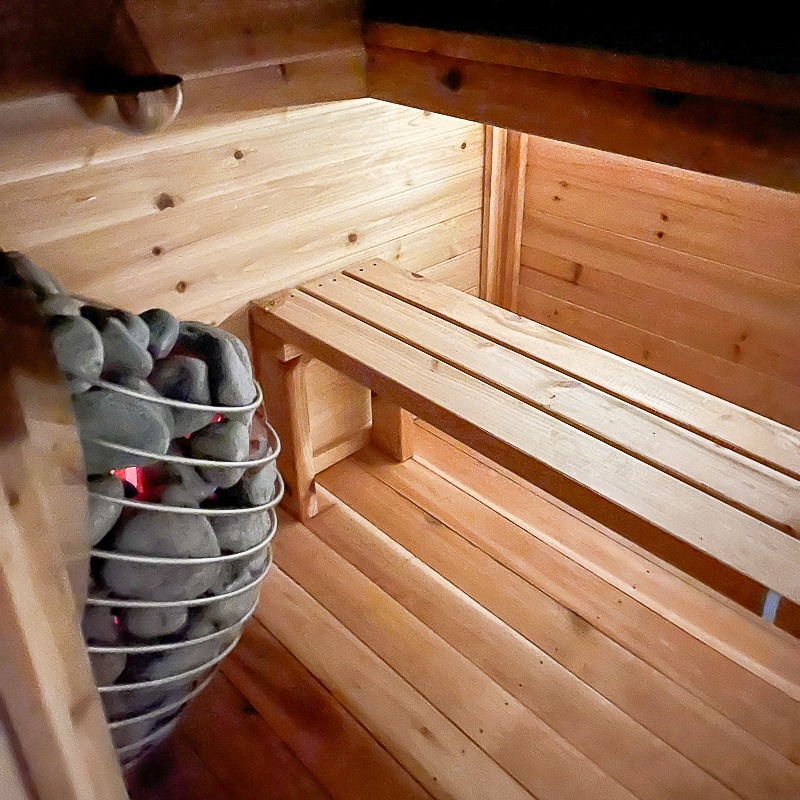
Interest in residential saunas has grown significantly in recent years, particularly among homeowners across the greater Chicagoland area looking to incorporate wellness-focused spaces into their homes. As that interest grows, so does a common question:
Should you choose a traditional Finnish sauna or an infrared sauna?
While each option offers unique benefits, they are fundamentally different systems – both in how they operate and how they integrate into your home. And, for homeowners considering a long-term investment, understanding these differences is essential. The right choice depends not only on your heat preference, but also on your performance expectations, construction requirements, and long-term durability requirements.
So, if you're exploring a sauna as part of a broader home project, it's helpful to understand how it fits within a larger design-build construction approach.
What Is a Traditional Finnish Sauna?
A traditional Finnish sauna is typically defined by high ambient air temperature and a heated stone mass. The heat fills the room, creating an immersive thermal environment. Key characteristics include:
For homeowners interested in permanent installations, these are typically part of a fully integrated custom sauna design and build project.
What Is an Infrared Sauna?
Infrared saunas, by contrast, use radiant heat panels to warm the body directly, rather than heating the air. What’s more an Infrared system is often sold as modular or prefabricated units and are typically much less complicated to install. Key characteristics include:
One of the most noticeable differences between the two sauna types is the nature of the heat itself.
In a traditional Finnish-Style Sauna, the experience is enveloping. Heat fills the room, rising and circulating, creating a full-body thermal environment. The addition of steam from water poured over stones introduces humidity and intensifies the sensation. This creates a dynamic experience:
Health Considerations and Research
Much of the recent interest in saunas has been driven by research – particularly long-term studies conducted in Finland, that is making the rounds in news and social media cycles.
Sauna research studies show that that frequent use of traditional Finnish saunas has been associated with:
Installation and Construction Considerations
The differences between these systems extend well beyond user experience – they also affect how each sauna is designed and built. In many cases, these saunas are fully integrated into the home or built as standalone structures.
A traditional sauna is a true built environment, requiring careful coordination of multiple systems:
Durability and Long-Term Performance
For homeowners thinking in terms of long-term value, durability is a critical consideration.
Traditional Finnish Saunas – Built for Decades of Use:
Cost Considerations
Cost is often a factor, though it should be evaluated in context.
Traditional Finnish Saunas
A Note on Design Integration
One of the most overlooked aspects of sauna selection is how it integrates into the home.
Traditional saunas can be designed to align with architectural finishes; integrate into basements, bathrooms, or outdoor spaces; and complement other wellness features such as cold plunge areas.
Infrared units, by contrast, typically are more self-contained and less integrated into the broader design of the home.
How to Choose?
Here’s a quick easy-to-use checklist to help guide your decision:
1. What experience do you want?
Go Back Should you choose a traditional Finnish sauna or an infrared sauna?
While each option offers unique benefits, they are fundamentally different systems – both in how they operate and how they integrate into your home. And, for homeowners considering a long-term investment, understanding these differences is essential. The right choice depends not only on your heat preference, but also on your performance expectations, construction requirements, and long-term durability requirements.
So, if you're exploring a sauna as part of a broader home project, it's helpful to understand how it fits within a larger design-build construction approach.
What Is a Traditional Finnish Sauna?
A traditional Finnish sauna is typically defined by high ambient air temperature and a heated stone mass. The heat fills the room, creating an immersive thermal environment. Key characteristics include:
- Air temperatures between 160–200°F
- Stone-filled heater (electric or wood-fired)
- Optional steam (löyly) created by pouring water on stones
- Short, repeatable sessions (10–20 minutes)
For homeowners interested in permanent installations, these are typically part of a fully integrated custom sauna design and build project.
What Is an Infrared Sauna?
Infrared saunas, by contrast, use radiant heat panels to warm the body directly, rather than heating the air. What’s more an Infrared system is often sold as modular or prefabricated units and are typically much less complicated to install. Key characteristics include:
- Lower ambient temperatures (110–140°F)
- No steam or humidity component
- Gradual heat exposure
- Panel-based heating system
One of the most noticeable differences between the two sauna types is the nature of the heat itself.
In a traditional Finnish-Style Sauna, the experience is enveloping. Heat fills the room, rising and circulating, creating a full-body thermal environment. The addition of steam from water poured over stones introduces humidity and intensifies the sensation. This creates a dynamic experience:
- Heat can be adjusted through steam
- Temperature varies by bench height
- The environment feels active and atmospheric
- Infrared Sauna
- A more uniform but less immersive environment
- No humidity or steam component
- A quieter, more passive experience
Practical Takeaway: For homeowners seeking a traditional, immersive sauna experience, Finnish saunas are unmatched. Infrared systems may appeal to those who prefer a lower-temperature, less intense environment.
Health Considerations and Research
Much of the recent interest in saunas has been driven by research – particularly long-term studies conducted in Finland, that is making the rounds in news and social media cycles.
Sauna research studies show that that frequent use of traditional Finnish saunas has been associated with:
- Improved cardiovascular outcomes
- Lower risk of hypertension
- Reduced incidence of certain respiratory conditions
- Potential cognitive health benefits
- Relaxation and stress reduction
- Temporary improvements in circulation
- Comfort for individuals sensitive to high heat
Practical Takeaway: For homeowners specifically interested in evidence-backed wellness outcomes, traditional Finnish saunas currently have the strongest supporting data.
Installation and Construction Considerations
The differences between these systems extend well beyond user experience – they also affect how each sauna is designed and built. In many cases, these saunas are fully integrated into the home or built as standalone structures.
A traditional sauna is a true built environment, requiring careful coordination of multiple systems:
- Ventilation for air exchange and heat stratification
- Moisture management to handle steam and condensation
- Electrical or fire safety systems depending on heater type
- Material selection suited to repeated thermal cycling
- Proper insulation and vapor barriers
- Lower amperage electrical requirements
- Minimal ventilation needs
- No steam or moisture management system
- Often installed as modular or prefabricated units
Practical Takeaway: Traditional saunas require more design and construction expertise but offer a more complete and durable solution. Infrared saunas offer simplicity and speed of installation.
Durability and Long-Term Performance
For homeowners thinking in terms of long-term value, durability is a critical consideration.
Traditional Finnish Saunas – Built for Decades of Use:
- Built with high-performance materials for high heat tolerance
- Systems are engineered for repeated thermal cycling
- The structure functions as part of the home’s infrastructure
- Rely on electrical panels and components
- May have shorter functional lifespans depending on usage
- Are often treated as installable units rather than permanent structures
Practical Takeaway: Traditional saunas tend to align more closely with long-term residential construction standards, while infrared units may function more like appliances.
Cost Considerations
Cost is often a factor, though it should be evaluated in context.
Traditional Finnish Saunas
- Higher upfront cost
- Requires construction, materials, and design coordination
- Long-term durability and integration into the home
- Lower initial cost
- Faster installation
- Less construction complexity
Practical Takeaway: The decision is less about cost alone and more about whether the sauna is viewed as a long-term architectural investment or a standalone wellness feature.
A Note on Design Integration
One of the most overlooked aspects of sauna selection is how it integrates into the home.
Traditional saunas can be designed to align with architectural finishes; integrate into basements, bathrooms, or outdoor spaces; and complement other wellness features such as cold plunge areas.
Infrared units, by contrast, typically are more self-contained and less integrated into the broader design of the home.
How to Choose?
Here’s a quick easy-to-use checklist to help guide your decision:
1. What experience do you want?
- Immersive, high heat > Finnish sauna
- Lower heat, gentler feel > Infrared sauna
- Long-term, built-in feature > Finnish sauna
- Modular system > Infrared sauna
- Yes > Finnish sauna
- Not a primary concern > Either option
- Fully integrated > Finnish sauna
- Standalone > Either Option
- Design-build project > Finnish sauna
- Minimal install > Infrared sauna
- Frequent use > Finnish sauna excels
- Occasional use > Either option
- New project > Finnish sauna ideal
- Retrofit > Infrared may be easier
Final Thoughts: Choosing the Right System for Your Home
Both traditional Finnish and infrared saunas have a place in residential design. The right choice depends on how you intend to use the space – and how you view the investment.
For homeowners seeking a fully immersive, durable, and evidence-supported sauna experience, traditional Finnish saunas remain the benchmark.
For those prioritizing ease of installation and lower heat exposure, infrared systems can be a practical alternative.
At Ciancio Engineering, we work with homeowners across Chicago’s North Shore and Southern Wisconsin to design and build custom traditional Finnish saunas that are integrated, code-compliant, and built for long-term performance.
If you're considering adding a sauna to your home, we recommend starting with a thoughtful design approach – because the best results come from spaces that are not simply installed, but carefully built.
Learn more about our custom sauna and residential construction services or contact us to start the conversation.
Both traditional Finnish and infrared saunas have a place in residential design. The right choice depends on how you intend to use the space – and how you view the investment.
For homeowners seeking a fully immersive, durable, and evidence-supported sauna experience, traditional Finnish saunas remain the benchmark.
For those prioritizing ease of installation and lower heat exposure, infrared systems can be a practical alternative.
At Ciancio Engineering, we work with homeowners across Chicago’s North Shore and Southern Wisconsin to design and build custom traditional Finnish saunas that are integrated, code-compliant, and built for long-term performance.
If you're considering adding a sauna to your home, we recommend starting with a thoughtful design approach – because the best results come from spaces that are not simply installed, but carefully built.
Learn more about our custom sauna and residential construction services or contact us to start the conversation.